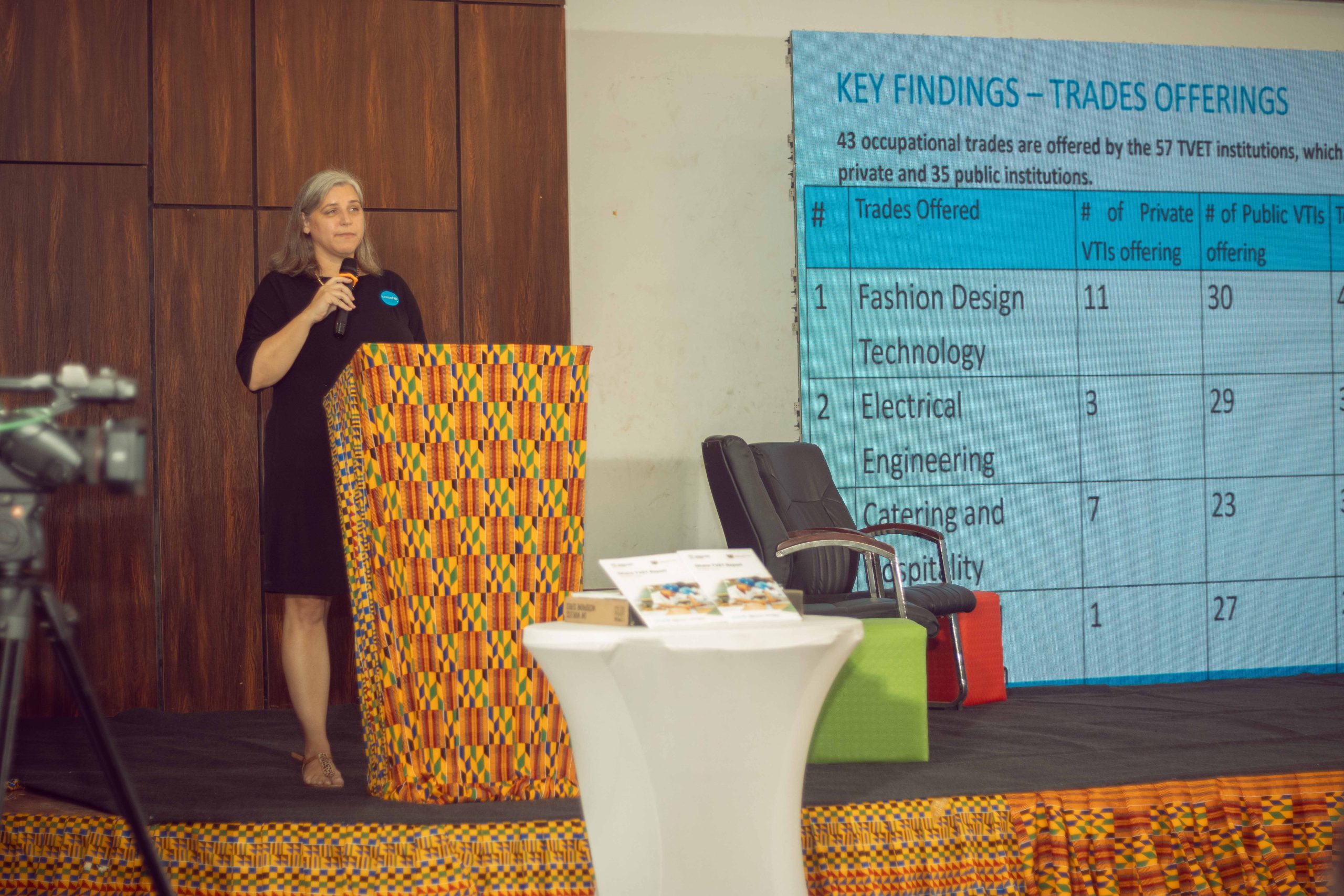
Government Reaffirms Commitment to Skills Development at Launch of Ghana TVET Report 2026
The Government of Ghana has reaffirmed its strong commitment to transforming Technical and Vocational Education and Training (TVET) into a central pillar of national development, as it officially launched the 3rd Edition of the Ghana TVET Report at a high-level symposium organised by the Commission for Technical and Vocational Education and Training (CTVET).
The event, which brought together policymakers, development partners, academia, and industry leaders, served as a strategic platform to assess the state of skills development in Ghana and chart a forward-looking path for the sector.
Delivering the keynote address, the Honourable Minister for Education, Haruna Iddrisu, described the report as a “critical instrument for evidence-based policymaking,” emphasizing that Ghana’s future competitiveness depends on a skilled and adaptable workforce. He noted that the report provides a comprehensive analysis of enrolment trends, institutional capacity, quality assurance systems, and labour market alignment, making it an essential guide for reforms in the sector.
The Minister highlighted government’s ambitious target to increase TVET enrolment from approximately 11 percent to 20 percent in the short term, stressing that this will be achieved through expanded infrastructure, modern training facilities, and stronger industry partnerships. He further outlined ongoing reforms, including the rollout of Competency-Based Training (CBT), Workplace Experience Learning (WEL), and structured apprenticeship programmes aimed at improving employability and productivity.
In his welcome address, the Director-General of CTVET, Zakaria Sulemana, underscored the importance of the report as an authoritative, data-driven document that consolidates insights across Ghana’s TVET ecosystem. He explained that the report fulfills CTVET’s statutory mandate under the Education Regulatory Bodies Act, 2020 (Act 1023), and serves as a foundation for policy formulation, planning, and sector coordination.
According to him, the report goes beyond presenting data by identifying key challenges such as infrastructure deficits, access and equity gaps, financing constraints, and weak industry linkages. He emphasized that addressing these issues will require sustained collaboration among government, industry, and development partners.
A key highlight of the Minister’s address was the planned development of a comprehensive TVET Management Information System (TVETMIS), which will digitalize data collection, accreditation, certification, and monitoring processes across the sector. The system is expected to enhance transparency, improve decision-making, and support real-time tracking of outcomes.
The symposium also featured a panel discussion on critical issues including the National TVET Qualifications Framework (NTVETQF), progression pathways, and the relevance of Higher National Diploma (HND) qualifications. Participants engaged in robust discussions on how to better align training with industry needs and strengthen pathways for further education and employment.
Development partners, including representatives from Germany, UNICEF, and GOVET/BIBB, reaffirmed their commitment to supporting Ghana’s TVET transformation through technical assistance, funding, and knowledge exchange.
The launch of the report marks a significant milestone in Ghana’s journey toward building a responsive, inclusive, and globally competitive skills development system. Stakeholders at the event agreed that the insights contained in the report must guide investments, reforms, and partnerships to ensure that TVET becomes a first-choice pathway for Ghanaian youth.
The event concluded with a formal launch ceremony and a call to action for all stakeholders to work collectively towards strengthening Ghana’s human capital and driving sustainable economic growth through skills development.